OBITUARY: Remembering Alan Jones, the champion who took Williams to new heights
David Tremayne takes a look at the incredible life of 1980 World Champion Alan Jones, who has passed away at the age of 80.
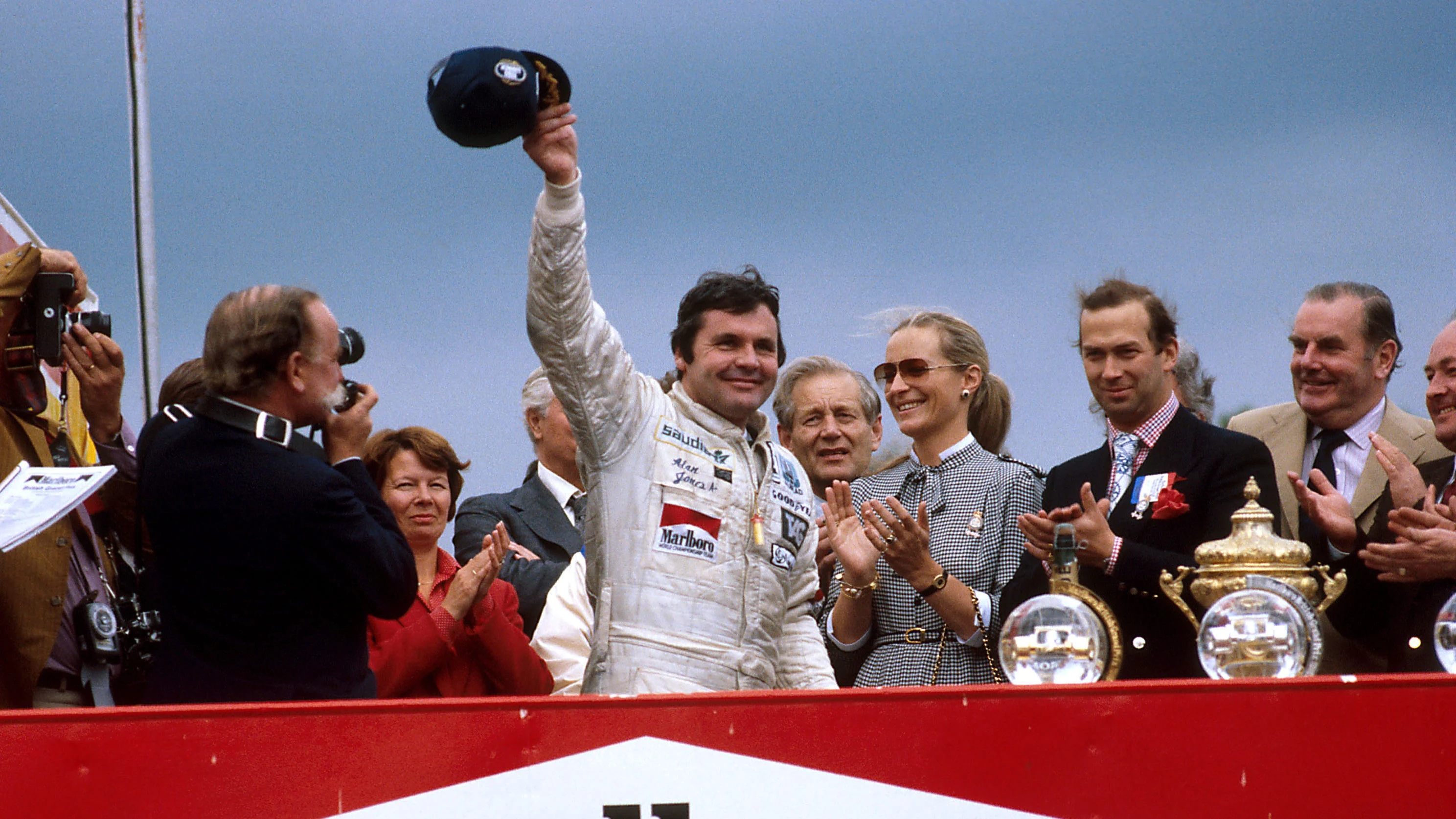
Aussie Battler may be one of those hackneyed nicknames for all Australian sportsmen but it was a title that fitted Alan Jones – who died on Thursday, three days after his 80th birthday – to a tee.
A genuine tough guy from Melbourne, he didn’t need molly-coddling by anyone but rose through the motorsport ranks to become World Champion with Williams in 1980 through a combination of bloody-mindedness and sheer grit.
His father Stan was one of those larger-than-life personalities. He was a farmer, but also ran a successful motor business selling up to 300 Holdens a month, and owned a series of dramatic Maybach-engined cars which he raced with gusto. His son was often there in the huge entourage he would take with him to events, and racing quickly captivated the boy.
Stan won the big races, notably the Australian Grand Prix and the New Zealand Grand Prix, and his best machine was a Maserati 250F, one of the most beautiful F1 cars of all time. Jonesey, as his son naturally became known, loved it. He was less enamoured of his father’s generosity to his numerous friends, however, later expressing the regret that some of that expenditure might have been re-directed towards his own racing career.
Instead, he had to do it the hard way. Australia had different minimum ages for driving licences, depending on the state. The lowest available was for 16-year-olds in South Australia, so he established an address there, got his licence at the earliest opportunity, and as soon as he could get a competition version too, he started racing himself.
Karting was popular in Victoria, and soon he was state champion. That led to a Mini 1000 which he and Stan bought for £250 but on which his father lavished nearly four times as much making it into a racing machine. Jonesy spun it on the first corner he drove it through but later used it to win the Victoria Hillclimb Championship.
But it was in 1963 that he took his really first significant steps, with the 2.2-litre Climax-engined Cooper single-seater that Stan also had in his copious garage, and which he eventually let him race in a sprint at Calder; subsequently, Jonesey regularly walloped the locals in their home-built specials.
Then recession hit Stan’s motor business very hard, and Jonesey couldn’t race for several years. Instead he did what many Antipodeans did back then, and headed for England in 1967, with fellow aspiring racer Brian Maguire. They were captivated and vowed to return, and when they did, Jonesey had just £75 in his pocket.
His wife Bev lent him £25 to buy a Minivan and he and Brian set about trading them. Eventually they started racing in Formula Ford, but that lacked power and later experiments with an old Lotus 41 led to a shunt and a broken leg. But he used the downtime to focus on the car trading and purchased a damaged Brabham BT28 F3 car from fellow Aussie Alan McCully.
Stan knew Jack Brabham’s partner Ron Tauranac, and after the car had been repaired, Jonesey started racing it in the hotbed of British F3 in late 1970. When he went to the Brazilian F3 Torneio series he started to get noticed, ironically when he started using a ‘bitsa’ engine and traded times with star Aussie Dave Walker, who was driving the works Team Lotus car.
Jonesey, McCully and Maguire then started AIRO (the Australian International Racing Organisation), running BT28s in 1971. They followed up with BT38s in 1972, but the GRD 372 and the Ensign LNF3 were the cars to have that year.
In 1973, Jonesy joined Scotsman Denys Dobbie’s DART team and finally started to break through with their GRD 373. Ironically one of his biggest wins came days after Stan had died, at Silverstone in an older chassis after he’d damaged his regular car. And while he may have been as tough as nails, he admitted that he broke when he received the laurel wreath, which he placed on his father’s coffin on their journey back Down Under for the funeral.
By 1974, when Dobbie’s team had failed, he was lucky to become a regular winner in Formula Atlantic in Harry Stiller’s March. Stiller had once supported Frank Williams and, after recommending Jonesy for a drive that proved hazardous, the two had got together.
Soon he was an established name in British racing, Bev meanwhile running a boarding house for travelling Aussies as they struggled to make ends meet. It was thus a huge surprise when Stiller called to say that he had cancelled tentative plans to go Formula 5000 in 1975 because of the oil crisis, and had instead bought a Hesketh 308B. Suddenly, Jonesey found himself living his dream of driving in F1. In the same car as James Hunt…
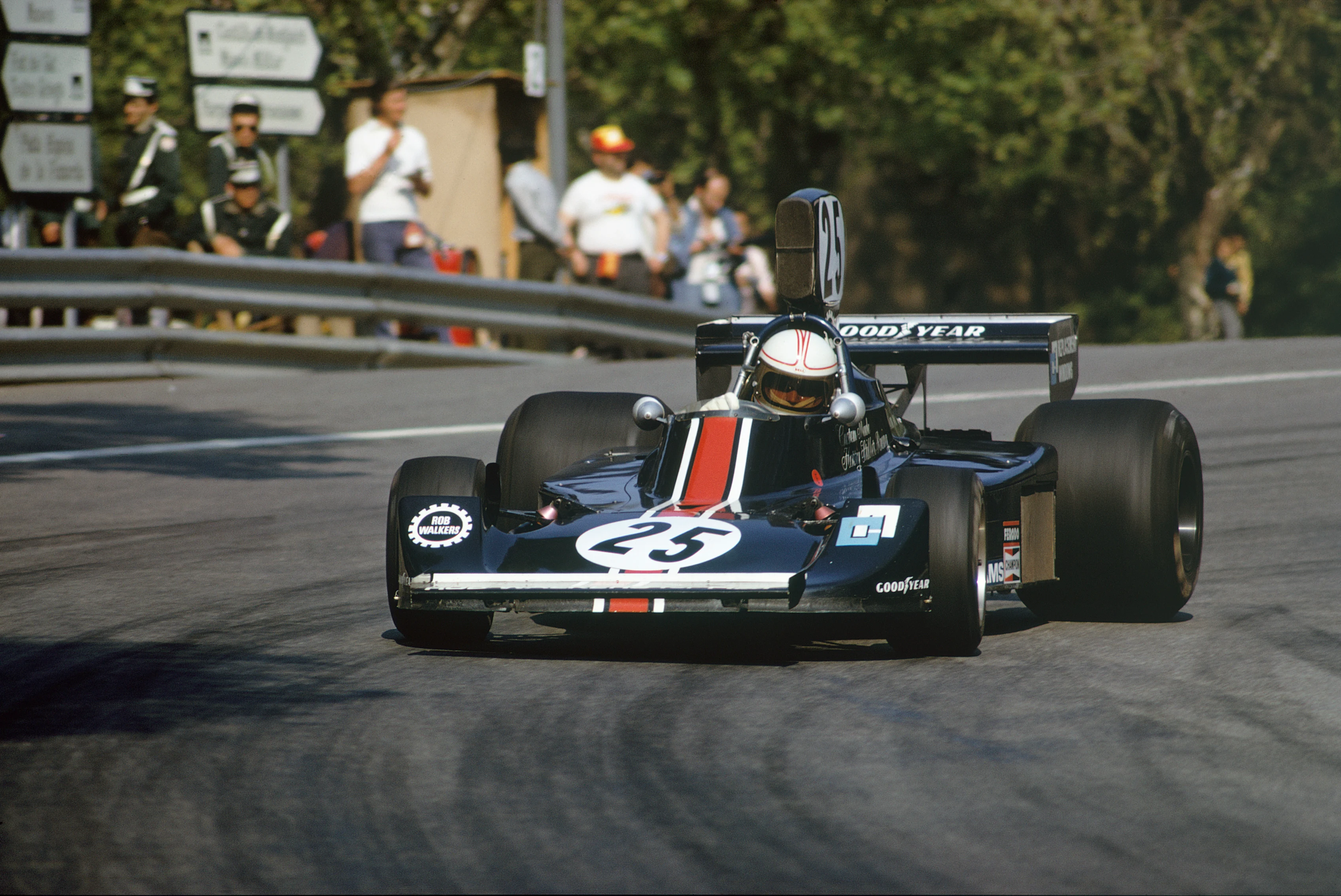
He finished seventh with it in the International Trophy race at Silverstone and then made his race debut in the Spanish GP at Montjuich Park, the race in which Rolf Stommelen’s Embassy Hill crashed into the crowd when its rear wing broke. When Stiller suddenly had to close his team, Graham Hill lost no time signing Jonesey as Stommelen’s replacement alongside rising star Tony Brise. At the same time, he also drove John MacDonald’s F5000 March-Cosworth, and suddenly he was on his way, establishing himself as a new hot property.
Such was the reputation he built that he was invited to join former motorcycle and F1 World Champion John Surtees’ F1 team for 1976, and made a big impression when he came close to beating Hunt in the Race of Champions. But Jonesy and Surtees’ relationship became increasingly fractious, and by season-end he was going to quit no matter what the cost to his career.
He fell back into F5000 with Teddy Yip in 1977 – winning the same Australian Grand Prix his father had with the Hong Kong entrepreneur’s Lola T332, and did some USAC Indycar racing, which was less successful. But fate had something else in store.
After Tom Pryce had been killed in the South African GP at Kyalami, Jonesey received a call from team co-owner Jackie Oliver offering him the drive alongside newcomer Ricardo Patrese, who had replaced Pryce’s team-mate Renzo Zorzi. Reckoning that Shadow was one of the few small teams that could be on the verge of success, he accepted. And after a series of strong performances, he finally broke through to win the wet Austrian GP. It would be Shadow’s sole major Grand Grix success and it led to the final stage in his graduation.
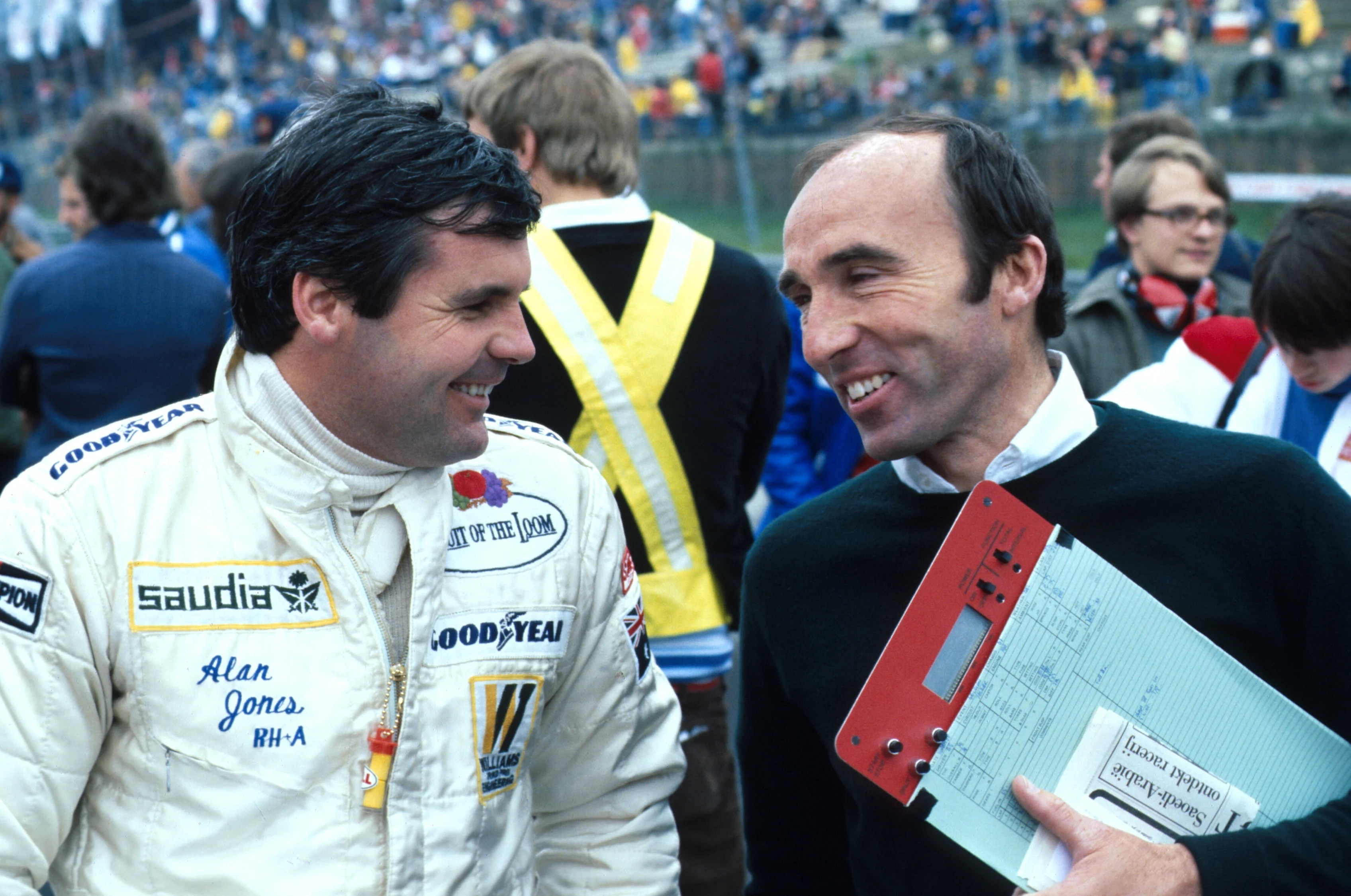
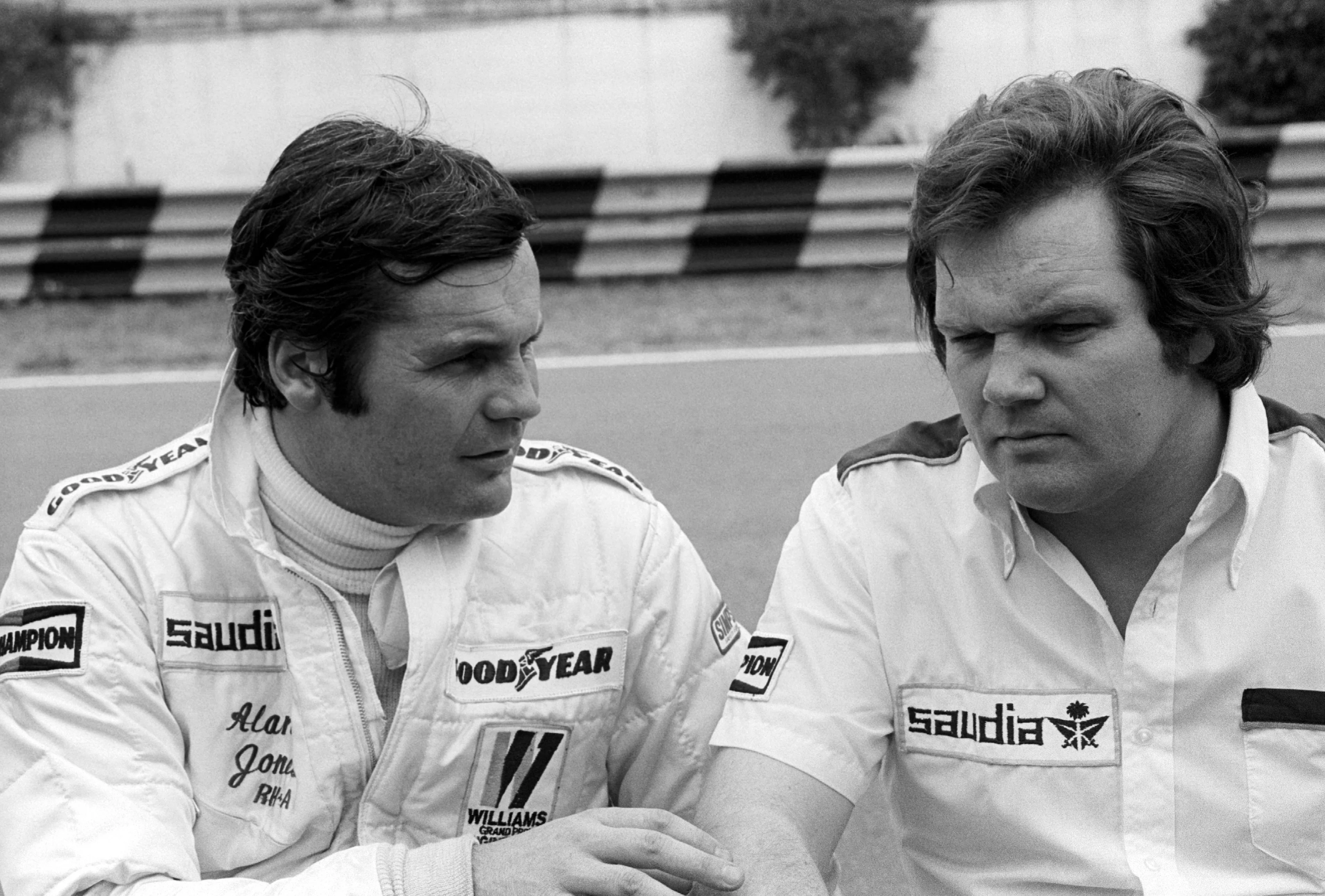
At the end of the year, Williams restarted his own team after an unhappy time when sponsor Walter Wolf took over the original version. And, crucially, Frank took along designer Patrick Head.
Both were hard-headed men who knew what they wanted, Frank the dreamer who camped out for days before securing Saudi sponsorship, Patrick the non-nonsense pragmatist. He designed a beautiful little car called the FW06, which was sleek but conventional and exactly the sort of machine a new team needed. And now they needed a driver.
In Alan Jones they found the perfect no-nonsense racer. Jonesey was a man whose temperament and general approach to life and racing perfectly meshed with Frank and Patrick’s. Theirs was a match made in F1 heaven.
After a narrow miss in the United States Grand Prix West in 1978, when the front wing broke, the team had a series of strong races: fourth in South Africa; fifth in France; and second in the US GP East. And then for 1979 came Head’s ground effect FW07, the car which harnessed undercar downforce but also allied it to the crucial torsional rigidity that innovator Colin Chapman’s 1978 title-winning Lotus 79 would now be shown to lack as its opposition began to catch up.
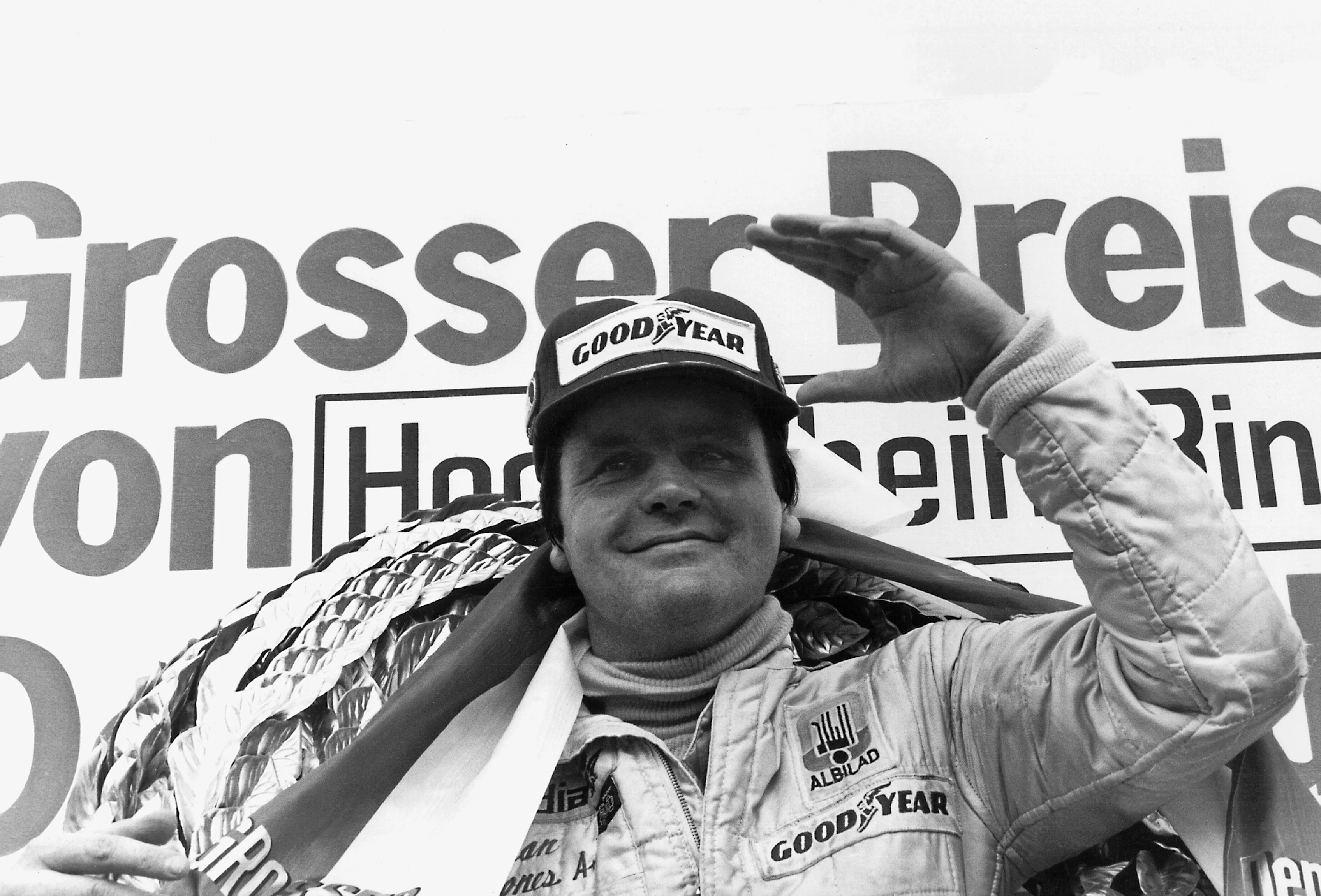
Clay Regazzoni scored the revived Williams team’s first win, in the British GP at Silverstone, but Jonesey went on to win the German, Austrian, Dutch and Canadian races and to finish third overall in the World Championship.
The following year he won the Argentine, French, British, Canadian and US GP East races. That string of success cemented the World Championship for Drivers for him as Williams won the World Championship for Constructors after a bitter fight with Nelson Piquet and Brabham, setting Frank and Patrick on their Yellow Brick Road.
Jonesey was always a clean driver, but had that hard, self-reliant edge that all champions need, and Frank and Patrick loved him. He was a man’s man and a tough guy, and you didn’t beat him unless you were pretty special yourself.
That form continued into 1981 when he won the US GP West that opened the season, and the Caesars Palace GP that closed it, but in between was a mixed bag of results and retirements that left him third overall as Piquet narrowly beat Williams’ second driver, Carlos Reutemann. Jonesey never forgave the Argentine when he refused to obey team orders to hand him victory in the Brazilian GP.
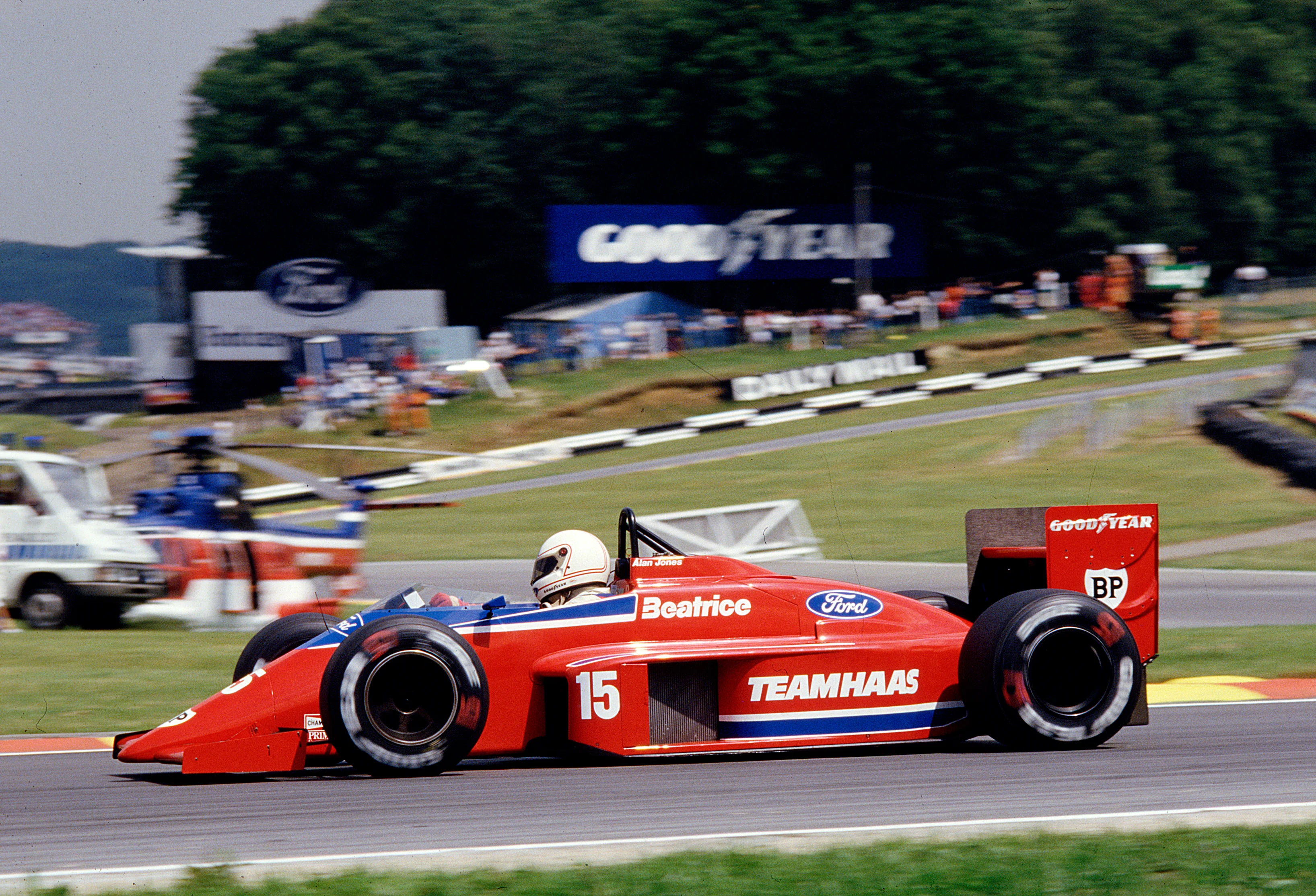
A hugely popular racer because of his courage and hard-but-fair, head-down determination, he retired at the end of that 1981 season, but was tempted back very briefly by Arrows in 1983, and then for much longer by the well-sponsored Team Haas (USA) in 1985, after standing in for Mario Andretti at Road America in the team’s CART campaign, where he finished an impressive third. He continued with the team with bespoke Ford power in 1986, but they were still unable to furnish him with winning equipment, and he retired for good from F1 at the end of that season.
He raced Porsches in Australia, became an outspoken F1 commentator for Channel 9, and raced for the next decade or so in the Australian V8 Touring Car series in a variety of cars. His best result was second overall to his own team-mate Glen Seaton in their Ford Falcons in the 1993 series. He ran his own team of Falcons in 1996, but returned to drive for his old boss Tony Longhurst with mixed results before retiring for good in 2002.
He later held the Australian franchise in A1GP, but abandoned plans to compete with other former F1 stars in the Grand Prix Masters race at Kyalami in 2005 when he decided he did not feel physically fit enough for the challenge.
“Alan dedicated his life to motorsport, building a legacy that will live on through the countless people he touched along the way,” his wife Amanda Bulker-Davis said in a statement issued by Motorsport Australia. “Through his achievements, passion and unmistakable character, both on and off the track, Alan left an enduring mark on the sport both nationally and across the globe.
“As a family, we would like to take this opportunity to thank everyone who was part of Alan’s journey for the many years of friendship, love and support. He was incredibly fortunate to have so many wonderful people around him.”
Next Up
Related Articles
 When could Mercedes win the 2026 Teams' Championship?
 'I don’t know what else they want’– Lawson on his F1 future
 BettingBest value early bets for the Sao Paulo Grand Prix
 LiveLIVE COVERAGE: Build-up to the Sao Paulo GP weekend
 Mercedes reveal how close Antonelli came to Mexico DNF
 UnlockedPlay Higher or Lower for your chance to win 2027 GP tickets