
.webp)
Audi created a stir on the first day of Bahrain testing with a new bodywork very different to that seen in the Barcelona Shakedown.
Aside from a new front wing, there is now a vertical radiator inlet, pared away bodywork around the front of a sidepod, which is full width and steeply downwashing further back.
It’s highly distinctive, and the vertical radiator inlet is unique among the 2026 generation of cars (though Red Bull and Mercedes have used this in the past). The inlet hugs the side of the monocoque and does not stray far from there. Beginning at the top of the tub, it stops well before the full height.
From the top of the inlet the bodywork flares out to meet a wide section of sidepod further back (where the outboard end of the side impact protection bar is exposed). From the bottom of the inlet the bodywork extends out and overlaps the leading edge of the floor, forming a lip.
The air pressure change created by this overlap will probably speed up the airflow to the underfloor – and any speed increase of that flow translates as extra downforce. Given the lip’s position – and that of the ‘daggers’ on the floor’s leading edge – in the sensitive area just inboard of the regulation floor boards, it’s likely also that they are trying to limit the in-washing effect of those floor boards.
The bodywork extending out from the top and bottom of the vertical radiator inlet, rather than creating an undercut as on most designs, instead creates a big concave section between the inlet and the wide section of the sidepod further back. This will be less powerful in speeding up flow to the floor edges.
Moving the widest part of the sidepod further back is the Audi aero team’s attempt at preventing the front wheel wake from disturbing the airflow. Combined with how they are manipulating the pressures from that lipped bodywork near the floor’s leading edge, it represents yet another way the various teams have found of generating as much outwash as possible behind the front wheels.
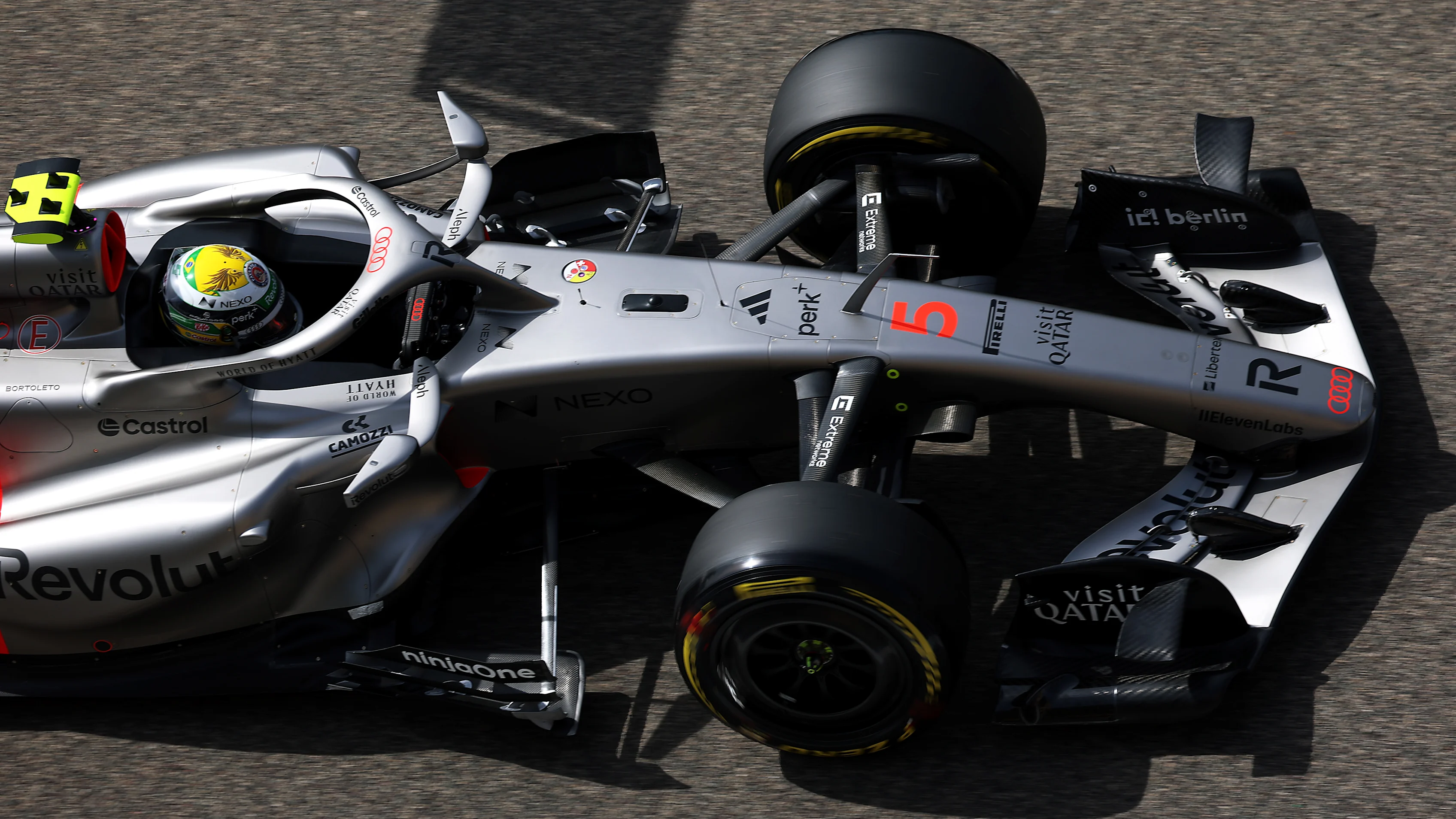
Audi may also be favouring enhancing the underfloor flow at the expense of flow to the exposed external side of the floor. Because the 2026 regulations have limited the number of devices which can be incorporated along the floor, there is a potential hazard of any flow fed to those floor edges getting pulled inward into the underfloor, which would disrupt that flow and slow it down.
So radically different is this layout from that of the car which ran at the Barcelona Shakedown, it suggests that the radiator layout and associated plumbing may have been revised. This is very much a ‘Spec 2’ car and will have been planned well in advance of the running in Barcelona.
Recall that Audi was first to do its filming day (also at Barcelona) and so the spec of that initial car will probably have been frozen earlier than those of most other teams. So, it’s not surprising that it’s the first to run a Spec 2 bodywork.
Next Up
Related Articles
 Stella reflects on McLaren's US GP after missing podium
 Betting5 betting lessons after Antonelli wins United States GP
 OFFICIAL GRID: Who starts where for the United States Grand Prix
 Lawson excited for what’s to come after more points in Austin
 UnlockedWhy Alonso seems as hungry as ever 20 years on from his last title
 All the key moments from the 2026 United States Grand Prix