Formula 1 has released its latest Impact Report, confirming that the sport has reduced its carbon footprint by 35% and is on track to achieve its Net Zero target by 2030.
The 2026 findings indicate that since a baseline was first set in 2018, F1 has made significant emissions savings across its freight, logistics, broadcast and race operation functions.
Departments across the sport have worked together to remove almost 80,000 tCO2e (tonnes of carbon dioxide equivalent) from operations over the last eight years – the equivalent of a single person flying over 500 million kilometres.
Today’s report also outlines how freight, one of the biggest considerations in the sport’s sustainability goals, will continue to be shifted away from air transport to sea and regional hubs, which will reshape how the sport travels globally.
More than half of the current broadcast and related freight will be removed from air transport by 2030, delivering long-term reductions in operational emissions while preserving the reach and scale that make the sport unique, aided by further investment in sustainable aviation fuel.
Stefano Domenicali, President and CEO of Formula 1, said: “At Formula 1, we act and show our achievements through facts, not just words, and I am incredibly proud that we remain on track to achieve Net Zero by 2030, made possible by the collective effort across the sport to reduce our environmental impact.
“From calendar rationalisation to greater investment in sustainable fuels and alternative energy solutions, we have reduced our footprint while the sport continues to grow and reach new audiences around the world.
“I would like to thank the FIA, all the F1 teams, our broadcasters, partners, promoters, and of course our team, for their shared commitment and for continuing to drive this forward together.”
At Formula 1, we act and show our achievements through facts, not just words
Ellen Jones, Head of ESG at Formula 1, added: “Sustainability underpins every decision we make, not only on the racetrack, but in how we produce and deliver our iconic events around the world.
“By doubling the sport’s investment in sustainable aviation fuel (SAF), making our first investment in sustainable maritime fuel, and continuing to work closely with promoters, teams and partners, we are driving further emissions reductions while accelerating the adoption of the latest technologies.
“These actions demonstrate our continued determination to lead through sustainable innovation. As we move towards our net zero by 2030 goal, the Future Race Operations Programme will deliver further significant reductions in the years ahead, alongside the full impact of calendar rationalisation, which will come into effect from the 2026 season.
“Together, these initiatives show that sustainable operations are not only possible at a global scale, but can be delivered without compromising the performance, ambition or spectacle that define Formula 1.”

How much has F1 reduced carbon emissions in travel?
Travel emissions have gone down by over 21,000 tCO2e, representing a 27% reduction compared to 2018. There’s more to come too, as F1 teams scale their investments in sustainable aviation fuel – an alternative fuel for aircraft that reduces emissions by an estimated 80% per flight compared to conventional aviation fuel.
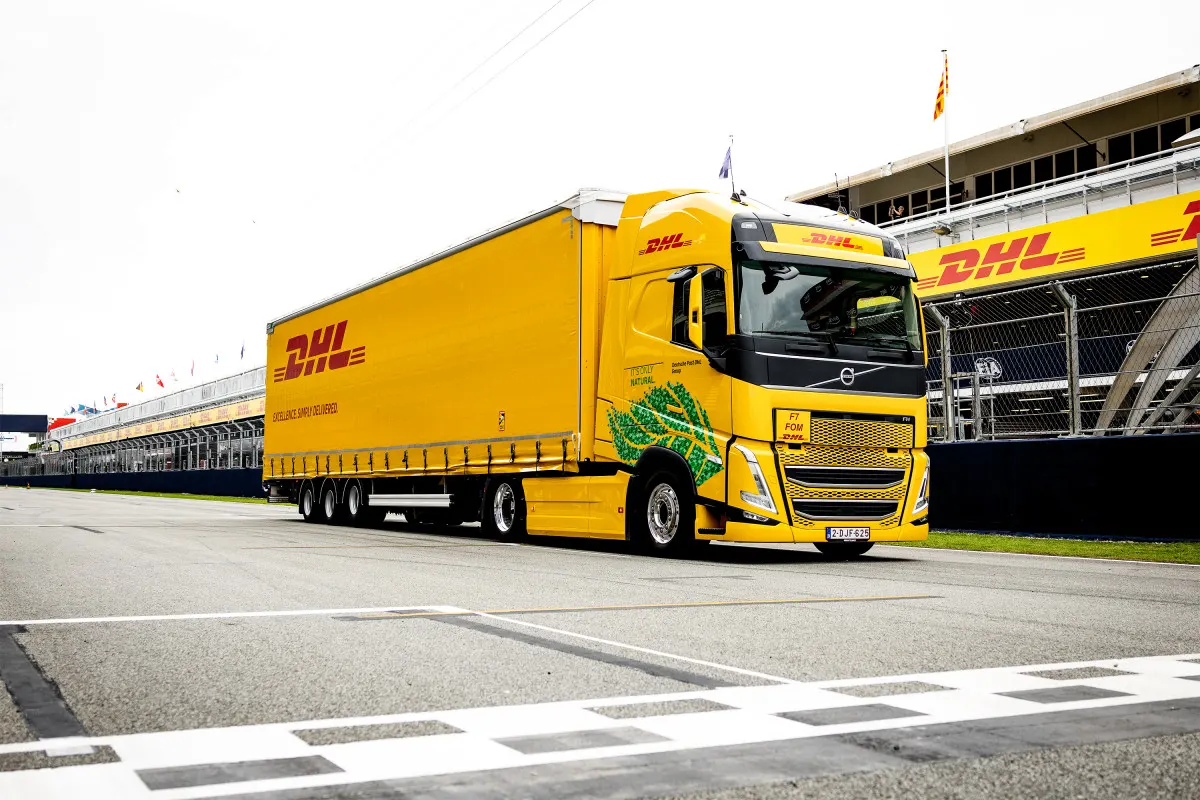
Logistics and travel go hand in hand when it comes to keeping emissions low, which is why F1 opts for an ultra efficient strategy focused on lower carbon solutions. The report describes how this has paid off as for the first time, freight operations have these solutions in place across all three freight modes – land, air and sea – with additional ongoing plans in place to scale these.
What about in factories?
Factories, facilities and offices can contribute significantly to emissions due to the amount of energy they use regularly, so F1 has worked with the grid’s 11 teams to transition to renewable energy sources to power the sites.
As a result, emissions have fallen by over 37,000 tCO2e in a 64% reduction against 2018 and a 14% reduction compared to 2024.
How exactly is that reduction being achieved?
As we’ve mentioned, renewable energy is a crucial factor, but the sport as a whole (including F1, the teams and the FIA) have doubled investment in sustainable aviation fuel year on year since the first investment back in 2024. This has delivered an approximate 40% reduction in related air charter emissions, equating to over 20,000 tCO2e.
With sea freight being used more often, there was also an inaugural investment in sustainable maritime fuel in 2025, establishing a long-term lower carbon solution for when cargo is shipped rather than flown to countries.
What about on race weekends? What’s being done trackside?
An incredible amount of work goes into hosting a Grand Prix, both on the side of F1 and its race promoters. From the paddocks and pit lanes to technical centres, it was important for the sport to implement alternative energy solutions across all European rounds in 2025, including low-carbon energy sources like HVO (Hydrotreated Vegetable Oil), solar and battery systems.
This has driven a 17% reduction in event operation emissions on a per-race basis – equal to over 1,000 tCO2e. With the calendar growing from 21 events in 2018 to 24 events last season, it's essential to remember that this progress has been achieved amid significant growth, and has been shaped by the fantastic collaboration between the sport and its promoters.
Next Up
Related Articles
 The 2026 Qualifying and race head-to-heads so far
 Vasseur admits to 'frustration' as 'pace was there' to win
 Leclerc your US GP Driver of the Day after fighting drive to P2
 AS IT HAPPENED: Antonelli wins United States GP in Austin
 Unlocked5 Winners and 5 Losers from Austin
 Antonelli and Mercedes 'faster than us' in US GP – Mekies